AI Tools Blog: guides, news & tutorials
Practical guides, honest tool breakdowns and the latest AI news, so you can choose and use the right AI tools with confidence.
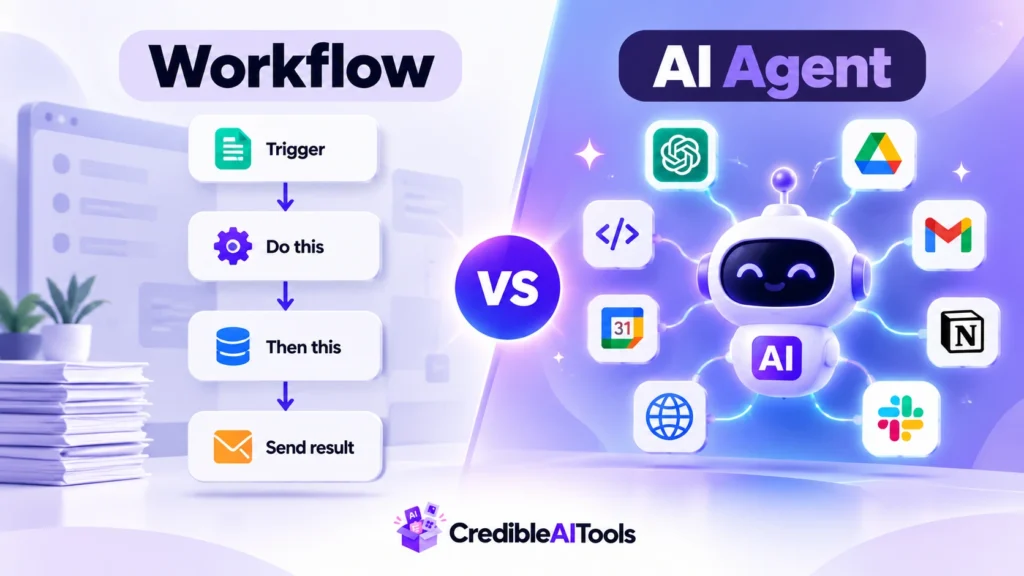
AI Agents vs Workflow Automation: Whatโs the Difference? (2026)
AI Agents vs Workflow Automation: What’s the Difference? (2026) For years, automating work meant building…
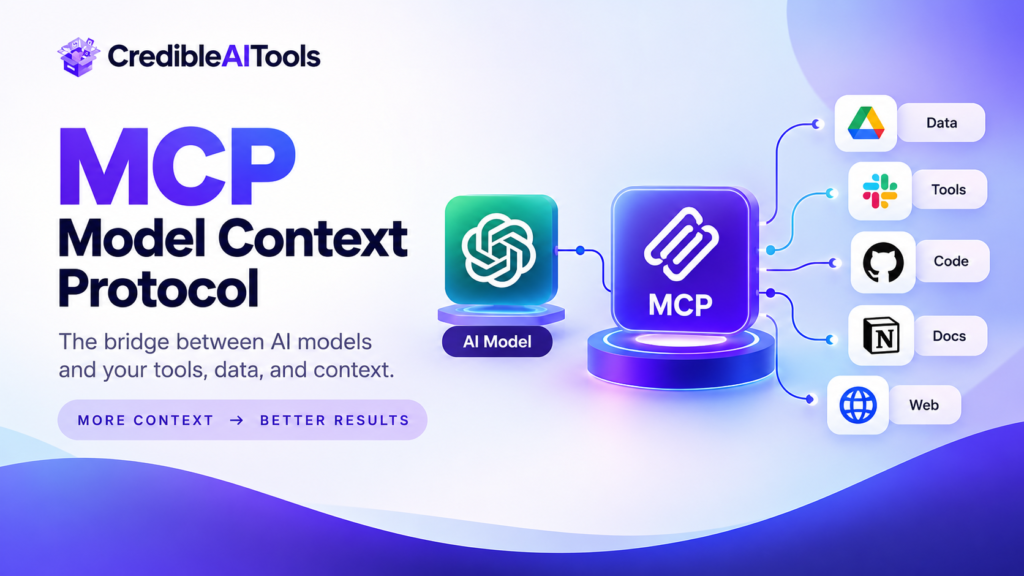
MCP Explained: How AI Finally Connects to Your Tools (2026)
AI assistants are great at talking. They get useful when they can act: read your…
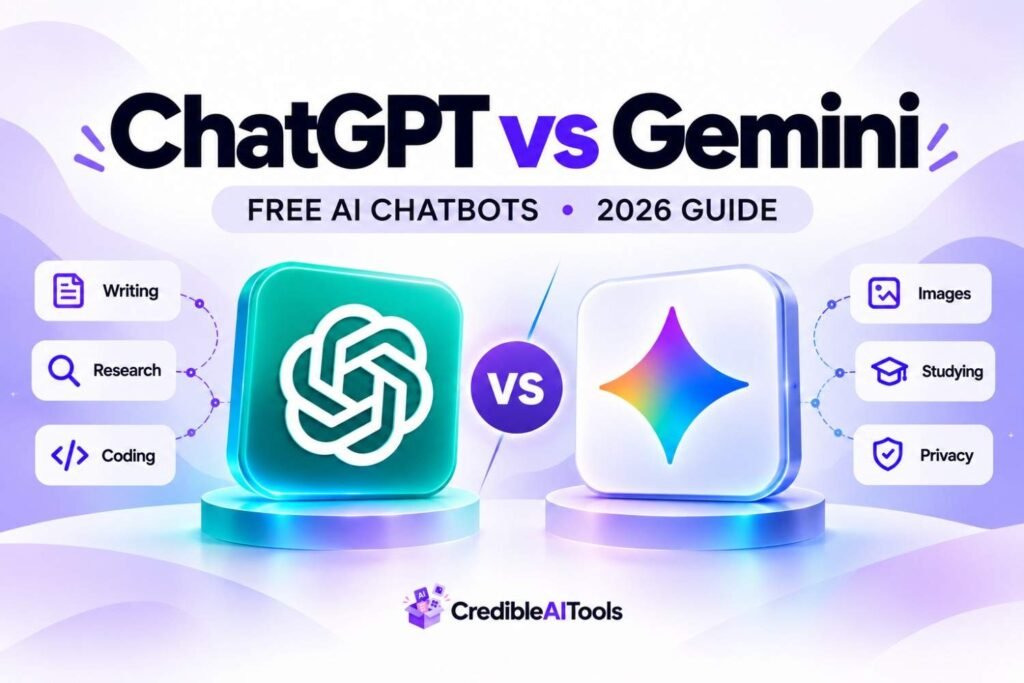
Chatgpt vs Gemini | Which is better in 2026?
Compare ChatGPT and Gemini on free plan limits, pricing, writing, studying, coding, images and privacy.…
Trending AI Tools You Should Know About
๐ฅ Trending Now AI tools are launching and updating faster than most people can track.…

AI tools for students to study smarter
๐ Study Smarter AI Tools for Students to Study Smarter(Not Harder) By CredibleAI Tools ยท…
How to Tell If an AI Tool Is Legit (Before You Try It)
New AI tools launch every single day โ sometimes it feels like every hour. Some…
AI Tools Blog & Learning Hub
Guides, explainers and practical tips to help you understand, choose and use AI tools with confidence. We are building this library now, so while new articles are on the way, start with the essentials on this page.
AI Tools Explained Simply
New to AI tools? Here is a simple introduction to what they are, how they work, the main types and where they fall short. Choose a question to read the answer.
What are AI tools?
AI tools are software products that use artificial intelligence, such as machine learning and large language models, to automate tasks, generate content, analyze data or assist with decisions.
- Writing assistants and chatbots
- Image, video and audio generators
- Coding copilots and automation platforms
How do they work?
Most modern AI tools rely on models trained on large amounts of data. You give an input, called a prompt, and the model predicts a useful output such as text, an image or code.
- You describe what you want
- The model generates a first draft
- You review, refine and try again
Types of AI tools
AI tools tend to fall into a few broad groups, and many products combine more than one.
- Generative tools that create text, images, audio and video
- Assistive tools that summarize, transcribe or suggest
- Automation tools that connect apps and run workflows
- Analytics tools that find patterns in data
Strengths and limits
AI is strong at first drafts, summaries and repetitive work. It is weaker at facts it has not seen, nuanced judgement and anything that needs guaranteed accuracy.
- Good for brainstorming, drafts and summaries
- Check carefully: facts, figures and citations
- Keep a human in the loop for important decisions
Key AI Terms Explained
AI comes with a lot of jargon. Tap a term to see a short, simple definition, or type to filter the list.
No terms match that search.
Using AI Tools Safely and Smartly
A few habits make AI tools more useful and less risky. Here are the four we recommend before you rely on any tool.
Protect your data
Avoid pasting passwords, financial details or confidential client information into AI tools. Check each tool's privacy policy to see how data is stored and whether it is used to train models, and look for options to opt out or delete your data.
- Read the privacy policy before you sign up
- Keep sensitive details out of prompts
- Look for data deletion and opt-out settings
Verify the output
AI can produce confident answers that are wrong. Check facts, figures, quotes and links against reliable sources before you publish or act on them, especially for health, legal and financial topics.
- Cross-check facts with trusted sources
- Confirm that links and citations exist
- Ask a qualified professional for important decisions
Check licensing
Rules about who owns AI-generated content and how it can be used differ between tools and between countries. This is general information, not legal advice.
- Read the tool's terms of use
- Check what each plan allows for commercial use
- Add your own input to the final work
Watch the pricing
Free plans often limit usage, features or exports, and pricing changes often. Check the details before you commit.
- See whether a credit card is needed to start
- Compare plan tiers, not just the starting price
- Know how to cancel before you subscribe
Be first to read our new guides
New guides and AI tool breakdowns are on the way. Join the newsletter to get them in your inbox.
Join the newsletter
Enter your email and we'll let you know when new articles go live.
We respect your inbox. Your email is only used for our newsletter.